







Weighted vs semi weighted keys comes down to how much resistance a key gives back when you press it. Weighted (hammer-action) keys use physical weights to mimic a real acoustic piano's heavier, springier feel, while semi-weighted keys use a lighter spring for a quicker, easier press. Fully weighted suits pianists who want authentic touch and dynamics; semi-weighted suits synth, organ and arranger players who value speed and comfort. This guide explains exactly how each feels, who each suits, and what to buy in India.
What "weighted" actually means on a keyboard
Every electronic keyboard makes sound electronically, so "weighted" never refers to the sound — it refers purely to the mechanical feel of the keys under your fingers. On a real acoustic piano, each key is connected to a small hammer that strikes strings, and that hammer gives the key a distinctive weight and rebound. Digital instruments recreate this in different ways, from simple springs to genuine miniature hammers inside the key mechanism, and the amount of resistance you feel is what separates the categories below. Understanding this distinction is the single most useful thing before you spend money, because two keyboards at similar prices can feel completely different.
Weighted vs semi-weighted vs synth-action: the three feels
Keyboard actions sit on a spectrum from feather-light to piano-heavy, and knowing where each sits helps you match an instrument to the music you play. The table below summarises the three common actions you will meet when shopping, and the prose after it explains why the differences matter in practice rather than just on paper. Read it alongside the price, because action type is often the biggest reason two keyboards cost what they do.
| Key action | How it feels | Best for |
|---|---|---|
| Fully weighted (hammer action) | Heavy, springy, closest to an acoustic piano | Classical, jazz, exam pianists, expressive dynamics |
| Semi-weighted | Light spring resistance, faster to press | Synth, organ, arranger and worship players |
| Synth-action (unweighted) | Very light, springy, quickest to play | Beginners, fast leads, portability, kids |
The important takeaway is that heavier is not automatically "better" — it is only better for certain goals. A pianist training for graded exams genuinely benefits from weighted resistance, while a gigging keyboardist firing off fast organ runs will often prefer the effortless speed of a lighter action. Your ideal action is decided by the music you want to play, not by which one sounds more premium in a spec sheet.
How weighted keys feel and who they suit
Fully weighted, hammer-action keys feel heavy and resistant at the start of the press and lighter as the key travels, closely echoing a real piano's response. This resistance is what lets a trained pianist shape dynamics — playing genuinely soft or loud by controlling finger force — and it also builds the finger strength that transfers cleanly to an acoustic instrument. If you are learning classical repertoire, preparing for Trinity or ABRSM grades, or you simply want the most authentic playing experience at home, weighted keys are worth prioritising. The trade-off is weight and cost: hammer-action instruments are heavier to carry and usually more expensive than lighter alternatives.
How semi-weighted keys feel and who they suit
Semi-weighted keys add a modest spring resistance that sits between a piano's heft and a synth's featherweight touch, giving a firm but fast response. This makes them a favourite for players who move quickly across the keyboard — organ players, synth soloists, worship and arranger keyboardists — because the keys return fast and do not tire the hands over a long set. They are also more forgiving for beginners who find full hammer action heavy at first, while still offering more control than a completely unweighted board. If you play a mix of styles rather than pure piano, semi-weighted is often the most versatile middle ground.
Do you actually need weighted keys?
Many buyers assume they must have fully weighted keys, but the honest answer depends entirely on your goals and how far you have progressed. If you are a complete beginner, a child, or someone who mainly plays chords, pop songs and arranger styles, a touch-sensitive or semi-weighted board keeps things comfortable and affordable while you learn. If you are serious about classical piano technique, exam grades, or expressive solo performance, then weighted hammer action becomes genuinely worth the extra spend. A practical middle path is to start light, learn the fundamentals, and upgrade to a weighted instrument once your technique and commitment justify it. For a first-timer's view of this exact decision, see our companion guide on weighted vs semi-weighted keys for beginners.
Touch-sensitivity vs weighting: an important difference
These two terms are frequently confused, but they describe different things, and getting them straight will save you from a disappointing purchase. Touch-sensitivity (also called velocity-sensitivity) means the keyboard plays louder when you hit a key harder and softer when you press gently — it affects the volume and expression of the sound. Weighting, by contrast, is about the physical resistance of the key itself, regardless of how the sound responds. A keyboard can be touch-sensitive without being weighted, which means it responds to your dynamics expressively even though the keys themselves feel light. The MAX Rhapsody DP88 (₹39,999) is a good example: it is a full 88-key, touch-sensitive digital piano with USB/MIDI, so it responds to how hard you play even though it is not a graded hammer-action instrument.
What to buy in India: matching action to budget
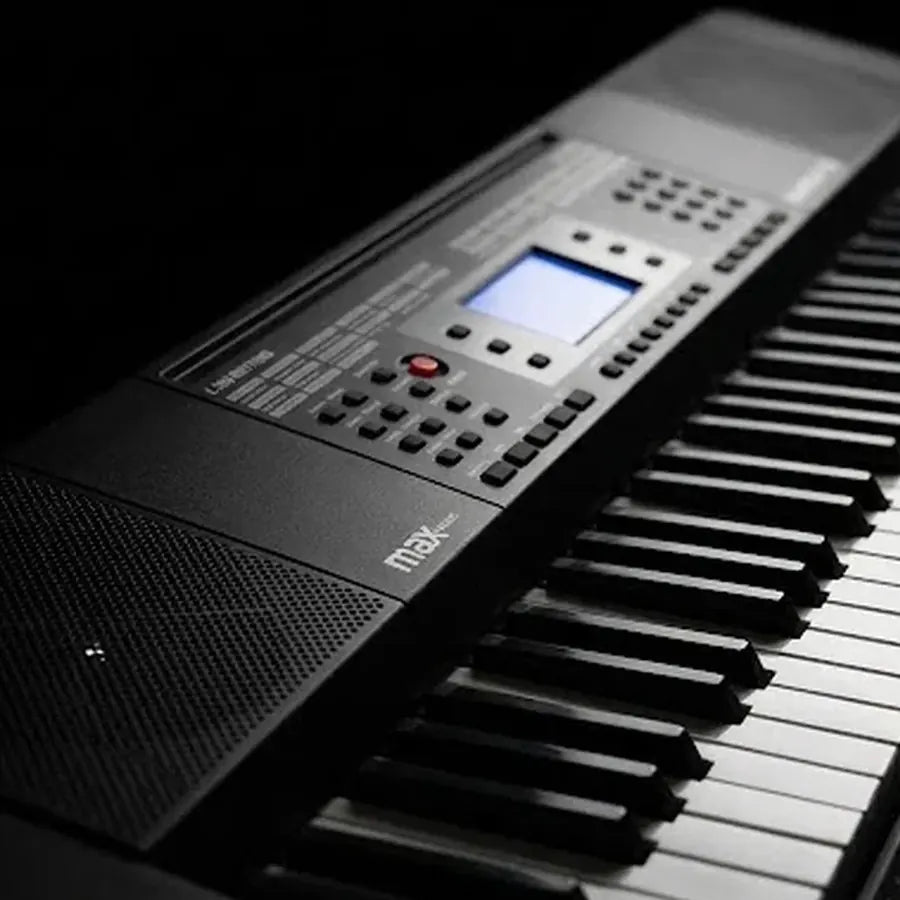
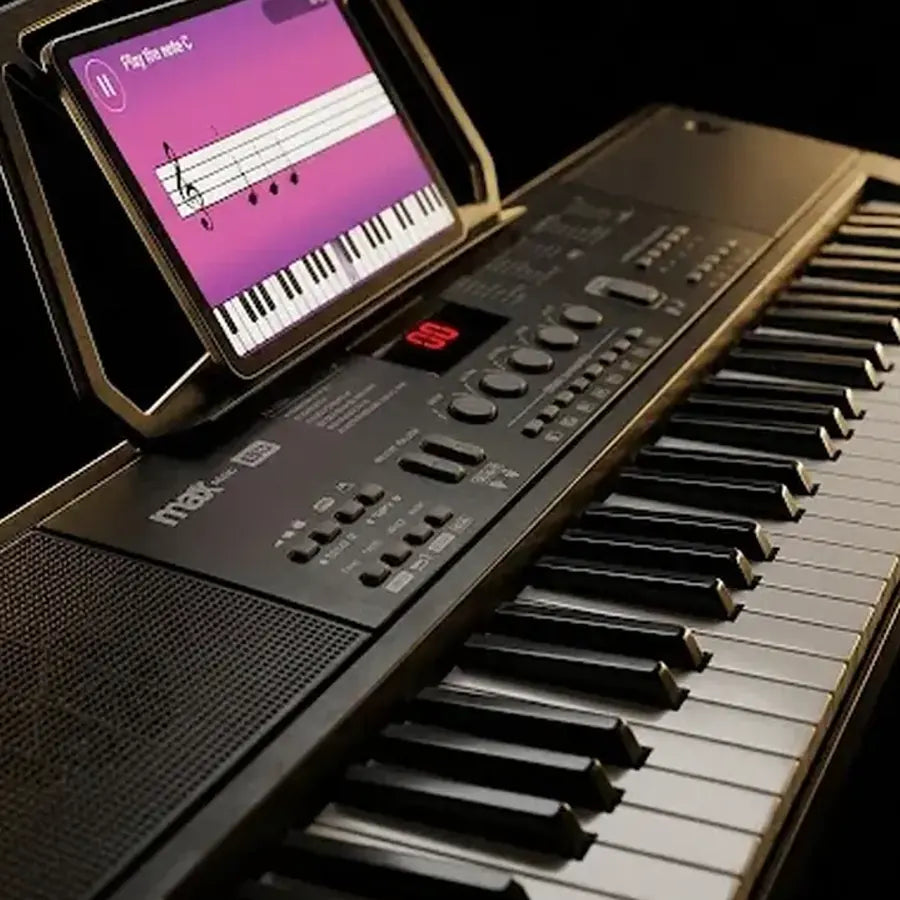
In the entry and mid-range Indian market, most affordable keyboards use light or touch-sensitive actions, and true graded hammer action tends to appear higher up the price ladder. If you want the largest, most piano-like playing surface at an accessible price, the 88-key MAX Rhapsody DP88 (₹39,999) gives you a full-size, touch-sensitive keyboard with computer/DAW connectivity. If you mainly want to learn songs, chords and arranger styles without the bulk or cost, a 61-key board such as the Rhapsody61 (₹13,999) is a comfortable, portable starting point. Be honest with yourself about whether you truly need graded hammer action right now, or whether a lighter touch-sensitive board will serve your playing better while you develop. Browse the full range on the keyboards collection to compare sizes and features side by side.
Frequently asked questions
What is the difference between weighted and semi-weighted keys?
Weighted keys use hammer mechanisms to feel heavy and springy like an acoustic piano, while semi-weighted keys use a lighter spring for a faster, easier press. Weighted suits pianists chasing authentic feel and dynamics; semi-weighted suits synth, organ and arranger players who value speed and comfort.
Are weighted keys better than semi-weighted?
Neither is universally better — it depends on your goals. Weighted keys are better for classical piano technique and exam preparation, while semi-weighted keys are better for fast, versatile playing across synth, organ and arranger styles.
Do beginners need weighted keys?
Not usually. Most beginners learn comfortably on touch-sensitive or semi-weighted keyboards, which are lighter and more affordable. Weighted hammer action becomes worthwhile once you commit to serious classical piano study or graded exams.
Is a touch-sensitive keyboard the same as a weighted one?
No. Touch-sensitivity means the sound gets louder or softer with how hard you play, affecting expression. Weighting is about the physical resistance of the keys, so a keyboard can be touch-sensitive while still having light, unweighted keys.
Ready to find your feel? Compare touch-sensitive digital pianos and portable keyboards in the keyboards collection and pick the action that matches how you play.