

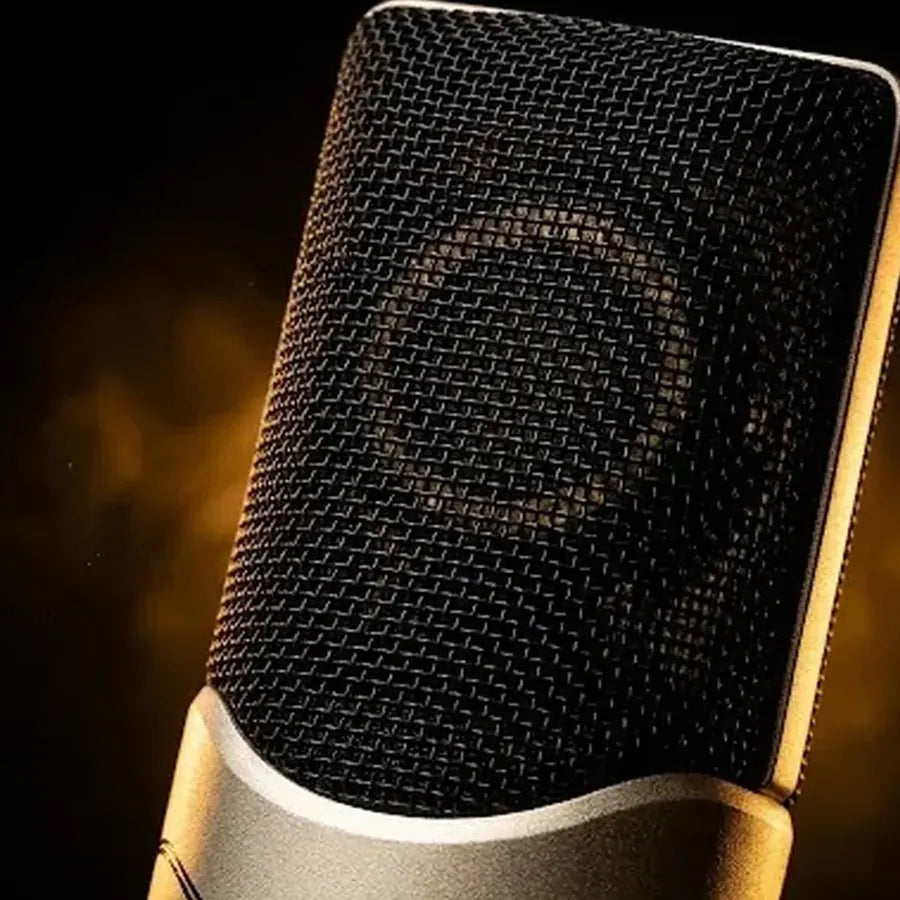





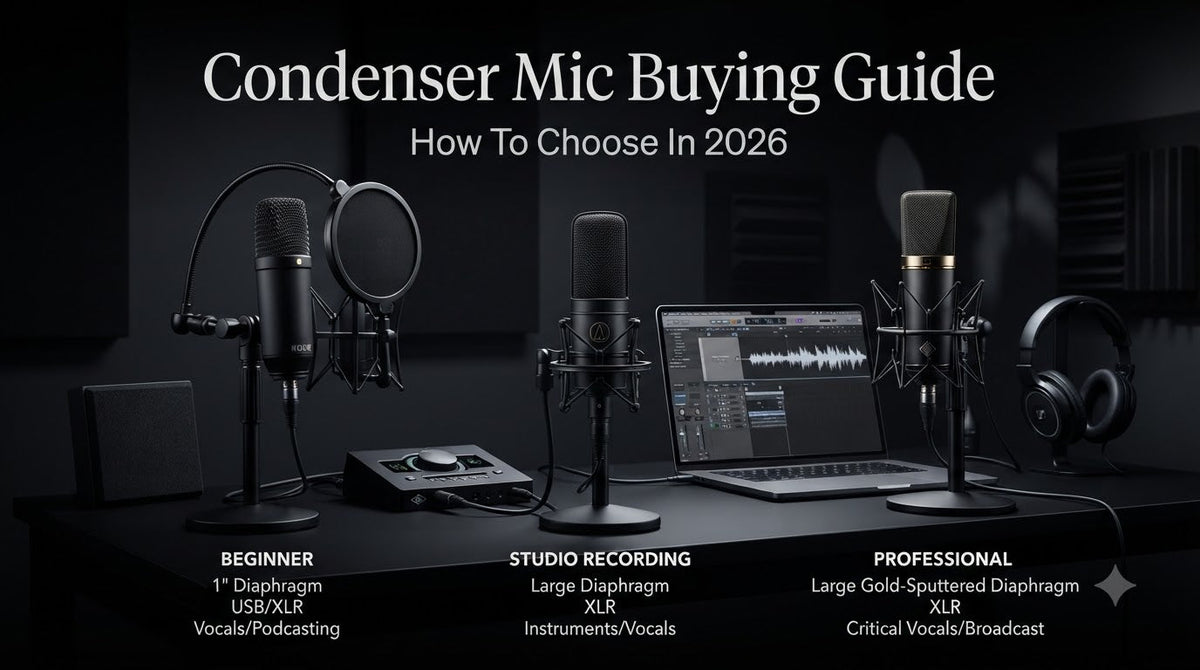
A condenser microphone is the type of mic most home and studio recordists reach for when they want detailed, natural-sounding vocals and acoustic instruments. It uses a thin, electrically charged diaphragm to capture fine detail and high frequencies that dynamic mics miss, which is why it dominates studio vocal booths. This buying guide explains how condensers work, what actually matters when you choose one, the phantom power and accessories you will need, and which real options make sense for Indian recordists in 2026 .
What is a condenser microphone and how does it work?
A condenser microphone captures sound using a lightweight diaphragm suspended a fraction of a millimetre from a fixed backplate, forming a capacitor whose charge changes as sound waves move the diaphragm. Because that diaphragm is so light, it responds faster and more accurately than the heavier coil in a dynamic mic, giving you the airy top end and micro-detail that make studio vocals sound "expensive." The trade-off is that this circuitry needs external power to run, and the extra sensitivity means a condenser hears everything in the room — including the fan, the street and the reflections off your walls. That sensitivity is a feature in a treated studio and a liability in a noisy, echoey bedroom, which is the single most important thing to understand before you buy.
Condenser vs dynamic: which should you buy?
The choice between condenser and dynamic is really a choice about your room and your source, not about which mic is "better." A condenser rewards a quiet, acoustically controlled space with stunning detail, while a dynamic mic is more forgiving, rejects room noise and handles loud sources without complaint. Read the comparison below, then match it to your actual situation rather than to what a studio on YouTube uses.
| Factor | Condenser microphone | Dynamic microphone |
|---|---|---|
| Detail & high frequencies | Excellent, airy and open | Warmer, slightly rolled-off top |
| Room sensitivity | Hears everything — needs a quiet room | Rejects room noise well |
| Power needed | Requires 48V phantom power | None |
| Best for | Studio vocals, acoustic guitar, voiceover | Live vocals, loud amps, podcasts in untreated rooms |
| Handling & durability | Delicate, use on a stand | Rugged, handheld-friendly |
In short, choose a condenser when you record singing or spoken word in a reasonably quiet, treated space and want maximum clarity. If your room is loud or lively and you cannot fix it yet, a dynamic such as the Eikon EKD7 (₹4,630) will often give you a cleaner, more usable result. Many working setups keep one of each for different jobs.
Large-diaphragm vs small-diaphragm condensers
Condensers split into two families, and picking the right one matters as much as picking a brand. Large-diaphragm condensers (LDCs) have a fuller, flattering low-mid character that suits vocals and voiceover, which is why they are the classic "studio mic" shape you see on a shock mount. Small-diaphragm condensers (SDCs, sometimes called pencil mics) are more accurate and even-handed, making them the go-to for acoustic guitar, strings, cymbals and orchestral work where honesty beats flattery. If you are buying one all-rounder for a home studio built around the human voice, a large-diaphragm model is almost always the smarter first purchase.
What to look for when buying a condenser microphone
Beyond the diaphragm size, a handful of specifications separate a mic you will keep for years from one you will outgrow in months. Use the points below as your checklist, and weigh them against the kind of recording you actually do rather than chasing the highest number on the spec sheet.
- Polar pattern (and whether it is switchable): A cardioid pattern picks up mainly what is in front and rejects the sides and rear, which is ideal for isolating a single voice. Multi-pattern mics that add omni and figure-8 — like the Sennheiser MK 8 — are far more versatile for duets, room ambience and different instruments, and are worth the premium if you record varied sources.
- Self-noise (equivalent noise level): This is the faint hiss the mic's own electronics produce, measured in dB-A, and a lower number means a quieter, cleaner recording. For quiet vocals, voiceover and delicate acoustic work, look for self-noise below roughly 15 dB-A so the mic itself never becomes the loudest thing in a soft passage.
- Maximum SPL and headroom: Max SPL is the loudest sound the mic can take before it distorts, and it matters if you belt vocals or mic loud instruments. A high max SPL plus a switchable pad gives you the headroom to record aggressive sources without clipping, which keeps your options open as your material changes.
- Frequency response: A gentle presence lift in the upper mids helps vocals cut through a mix, while a flatter response captures instruments more faithfully. There is no single "best" curve — match it to whether you mostly record voice (a little lift flatters) or instruments (flat is truer).
- Build, mount and included accessories: A metal body, a proper shock mount and a case protect a delicate capsule and save you buying extras later. Check what is in the box, because a mic that includes its mount and pouch can be better value than a cheaper one that leaves you shopping for accessories on microphone accessories.
Phantom power and what else you need
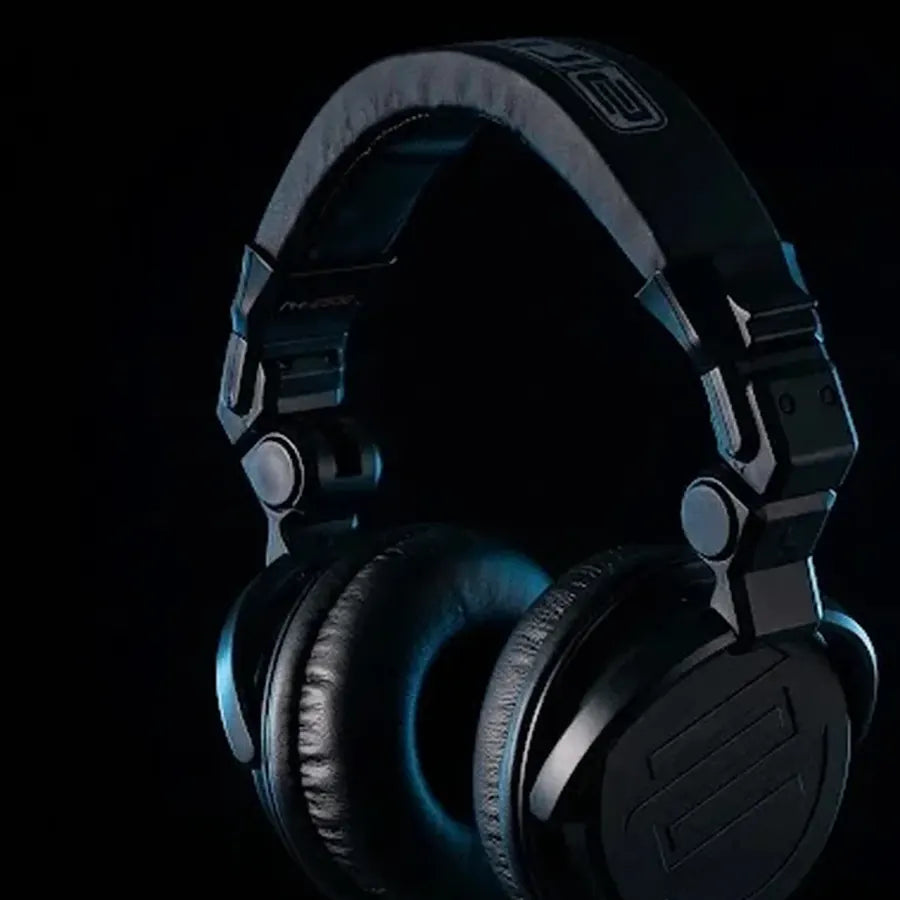
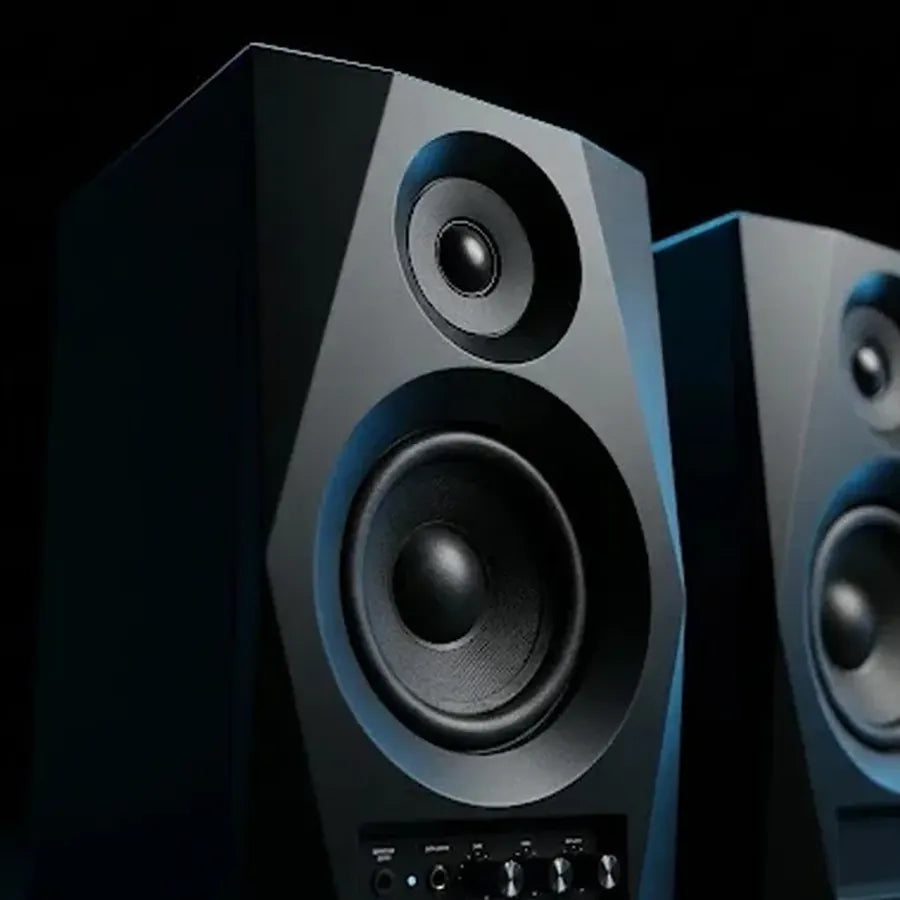
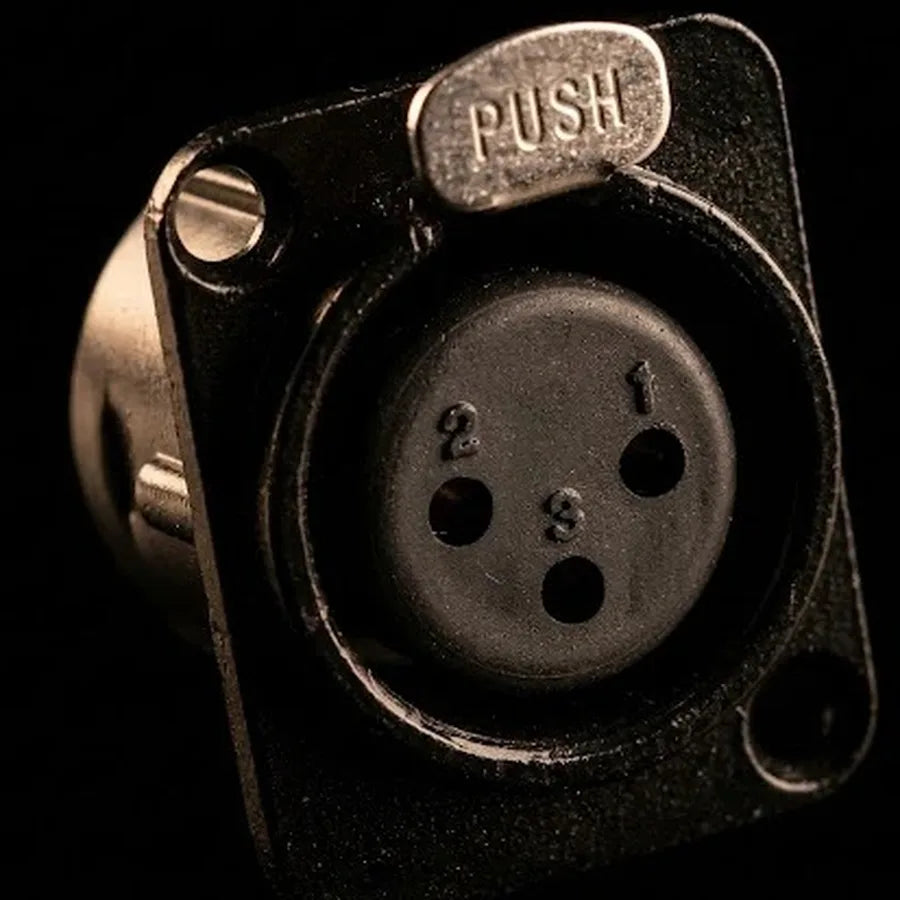
Every condenser needs 48V phantom power, which is a small DC voltage sent up the mic cable to run its internal circuitry, and this is the step most first-time buyers overlook. That power comes from an audio interface, a mixer or a dedicated preamp — a bare condenser plugged into a laptop's headphone jack will do nothing at all. You will also want a balanced XLR cable from the microphone cables range, a sturdy stand from the stands collection, a pop filter to tame plosive "p" and "b" sounds, and closed-back headphones for monitoring so the mic does not pick up bleed from speakers. For that last piece, the Sennheiser HD 280 PRO (₹7,250) is a studio-standard closed-back choice that isolates well while you track.
Condenser microphone prices in India (2026)
Condenser prices span an enormous range, from budget entry models to five-figure reference mics, so it helps to anchor your budget to a realistic tier rather than the extremes. An affordable studio condenser like the Eikon MFC81 (₹5,261) is a sensible starting point that gets you genuine large-diaphragm detail without overspending on your first mic. From there, professional multi-pattern models such as the Sennheiser MK 8 step up in versatility, self-noise and build for serious vocal work — because studio-mic price data shifts often, we list those by name and let you check the current figure on the collection page rather than quoting a number that may be stale. As a rule of thumb, spend where it counts (the mic and a quiet room) before splurging on accessories you can add later. If you want a plain-English starting point, our condenser microphone guide for beginners walks through the one right first pick.
Matching the mic to what you record
The final decision comes down to your primary source, because a mic that flatters vocals is not always the best on a brass instrument or a drum kit. Use the quick mapping below to shortlist, then confirm your choice against the specs and your room. Every mic named here is a real option you can browse on the microphones collection.
- Studio vocals and voiceover: A large-diaphragm cardioid condenser is the standard, with the multi-pattern Sennheiser MK 8 giving you room to record duets and different tonal characters. Pair it with a pop filter and a treated corner for professional-sounding takes.
- Acoustic guitar and strings: A small-diaphragm condenser captures the honest attack and shimmer of these instruments better than a large-diaphragm vocal mic. If you only own an LDC, position it carefully off-axis to tame boominess.
- Brass, woodwind and drums: An instrument condenser built for high SPL, such as the Sennheiser e908 B, clips onto the instrument and handles loud, dynamic playing that would overwhelm a delicate vocal mic. It keeps detail while surviving real stage and studio levels.
- Untreated or noisy rooms: If you cannot control your space, a dynamic mic is the more honest recommendation, because a condenser will faithfully record the noise you are trying to avoid. Fix the room first, then a condenser will reward you.
Frequently asked questions
What is a condenser microphone best for?
A condenser microphone is best for studio vocals, voiceover and acoustic instruments where you want detailed, natural sound in a reasonably quiet room. Its sensitive diaphragm captures fine high-frequency detail that dynamic mics tend to miss, which is why studios favour it for close vocal work.
Do condenser microphones need phantom power?
Yes. Condensers require 48V phantom power supplied by an audio interface, mixer or preamp to run their internal circuitry. Plugging one straight into a laptop or phone without that power will produce no usable signal, so budget for a powered input alongside the mic.
Is a condenser or dynamic mic better for home recording?
It depends on your room. In a quiet, treated space a condenser gives more detail and is the better choice, but in a noisy or echoey room a dynamic mic rejects unwanted sound and often sounds cleaner. Assess your space honestly before deciding.
What is the difference between large and small diaphragm condensers?
Large-diaphragm condensers have a fuller, flattering tone suited to vocals and voiceover, while small-diaphragm condensers are more accurate and even, making them ideal for acoustic guitar, strings and cymbals. For a voice-focused home studio, a large-diaphragm model is usually the better first buy.
How much should I spend on a condenser microphone in India?
A capable entry-level studio condenser starts around ₹5,000, which is enough to get real large-diaphragm detail for home recording. Professional multi-pattern mics cost more and add versatility and lower self-noise, so spend according to how serious and varied your recording is.
Ready to choose your condenser? Browse studio-grade condenser and vocal mics in the microphones collection — from affordable large-diaphragm options to professional multi-pattern models.