






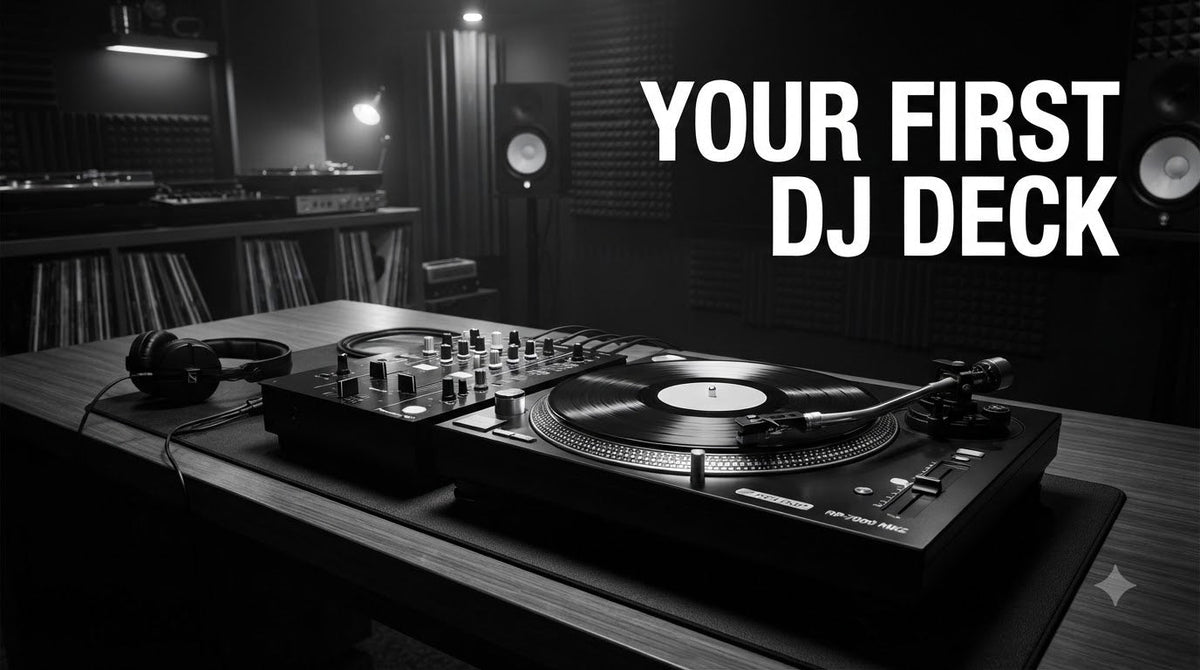
As a beginner in India, budget around ₹71,000 to ₹95,000 for your first proper DJ turntable. That gets you a genuine direct-drive deck that can actually scratch and beatmatch, rather than a toy that will frustrate you. The realistic starting point is the Reloop Turn 2 (₹72,638) or the portable Reloop SPIN (₹71,151). This guide is written purely for first-timers — what that money buys, the one right pick, and the worries beginners always have.
What does a beginner actually need in a first turntable?
Ignore the flashy features for now. As a beginner you need three things: direct-drive (so the platter has the torque and instant start needed to mix), a pitch fader (to match track speeds), and build quality that survives learning. Everything else — performance pads, premium tonearms, reference-grade sound — is genuinely useful later, but you can't use it well on day one and shouldn't pay for it yet.
The realistic beginner budget, explained
Turntables are a premium category, so it helps to be honest about the tiers before you buy:
| Budget | What you get as a beginner | Verdict |
|---|---|---|
| Under ₹58,000 | Mostly non-DJ belt-drive or toy decks that can't scratch properly | Skip for DJing |
| ₹71,000 – ₹75,000 | A real direct-drive or portable deck you can learn on | Best value first buy |
| ₹94,000 – ₹1,10,000 | Fuller-featured decks with better tonearm and torque | Great if you're committed |
For the full range and every price band, see our complete guide to the best DJ turntables in India.
The one right pick for most beginners
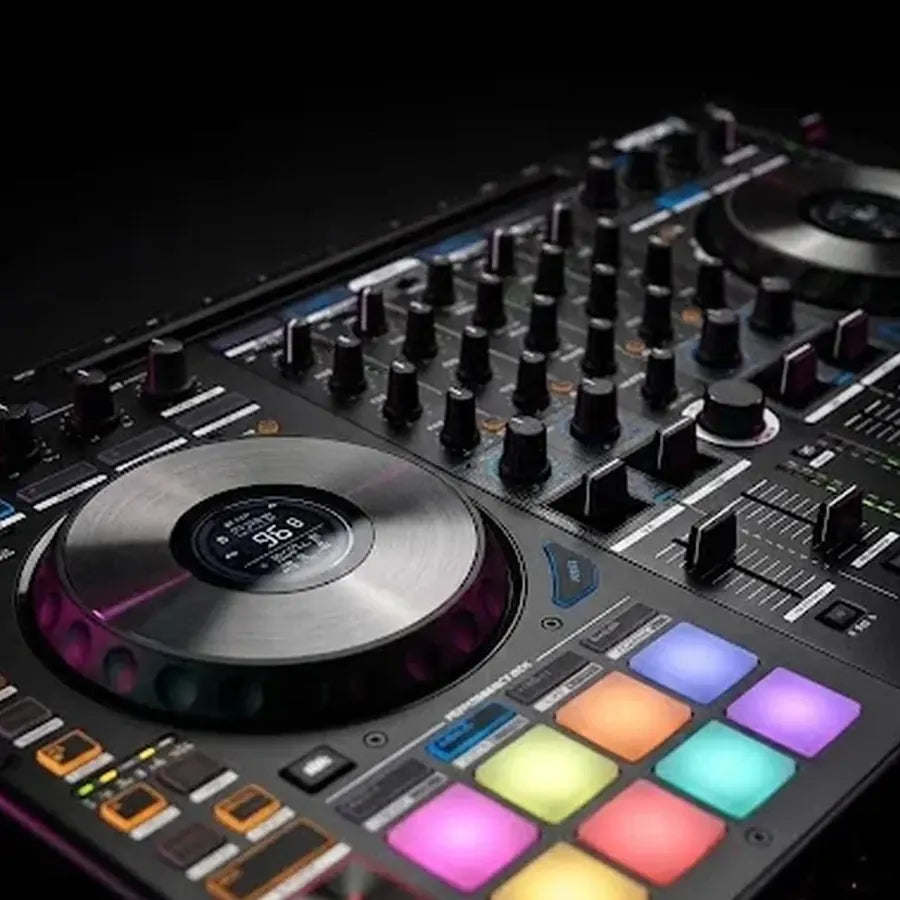
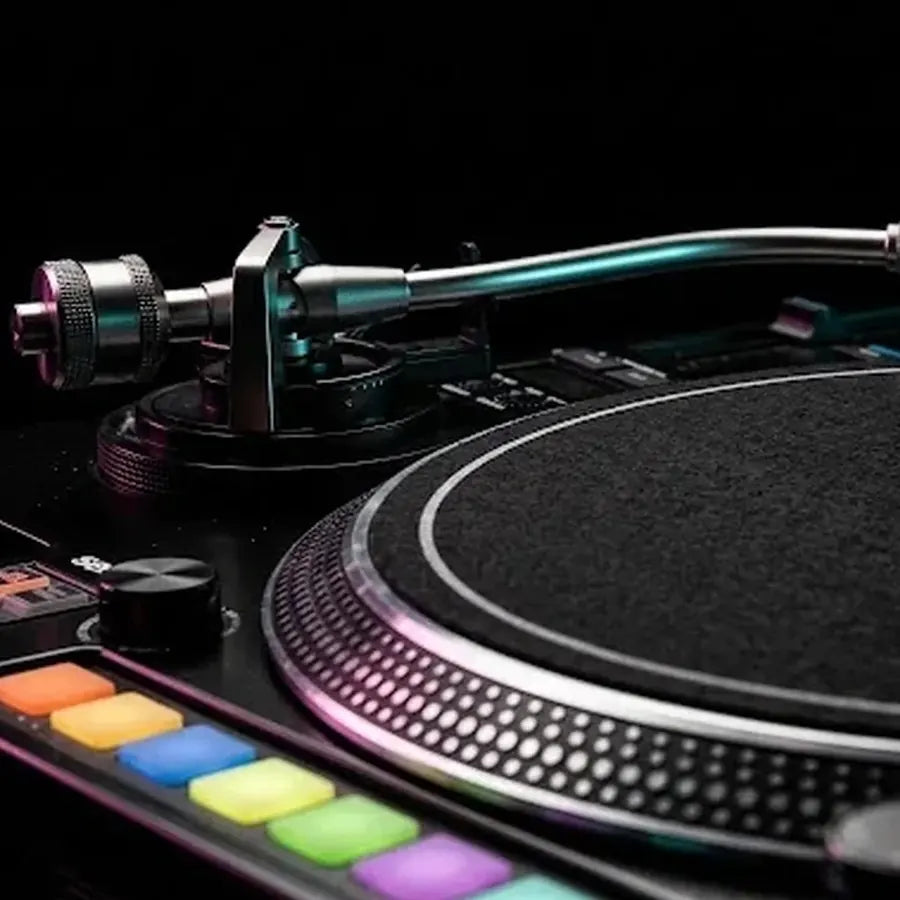
For most first-timers the Reloop Turn 2 (₹72,638) is the deck to buy. It is a true direct-drive turntable — instant start, solid torque, adjustable pitch — so the fundamentals you learn transfer straight to club decks later. It doesn't overload you with pro features you can't yet use, which keeps the price sensible and the learning curve friendly. Buy one now and it will still serve you well once you're mixing confidently.
Want to practise anywhere? Consider the SPIN
If space or noise is a concern, the Reloop SPIN (₹71,151) is a portable turntable with a built-in speaker and crossfader. You can practise scratch technique on the sofa without wiring up a mixer or monitor. It's a superb learning tool, though it's designed for practice and portablism rather than club use.
Common beginner worries, answered
"Do I need two turntables and a mixer to start?" Not immediately. Many beginners start on one deck to learn control and scratch technique, or use a portable all-in-one like the SPIN, then add a second deck and mixer once the basics click. "Is vinyl too hard to learn on?" No — it teaches feel and timing better than anything, and those skills carry over to every other format. "Will I outgrow a beginner deck fast?" Not if you buy a real direct-drive deck like the Turn 2; it's the cheap toy decks people outgrow, not genuine ones.
Frequently asked questions
What is the best DJ turntable for beginners in India?
The Reloop Turn 2 (₹72,638) is the best all-round first deck — a genuine direct-drive turntable that teaches transferable skills without pro-level cost. The portable Reloop SPIN (₹71,151) is ideal if you want to practise anywhere.
How much should a beginner spend on a DJ turntable in India?
Around ₹71,000–₹95,000. That gets a real direct-drive or portable deck you can actually learn to mix and scratch on, rather than a toy that discourages practice.
Do beginners need a direct-drive turntable?
Yes. Direct-drive gives the torque and instant start-up that scratching and beatmatching need. Belt-drive decks are for listening, not DJing, so learning on one holds you back.
Can I learn to DJ on just one turntable?
Absolutely. One deck is enough to master platter control and scratch basics, or use an all-in-one like the SPIN. Add a second deck and mixer once the fundamentals feel natural.
Ready for your first deck? Browse beginner-friendly, genuine direct-drive turntables in the DJ turntable collection.